


With Publicis' Acquisition of LiveRamp, Switzerland Just Picked a Side
Blog
•
4
Mins
Share
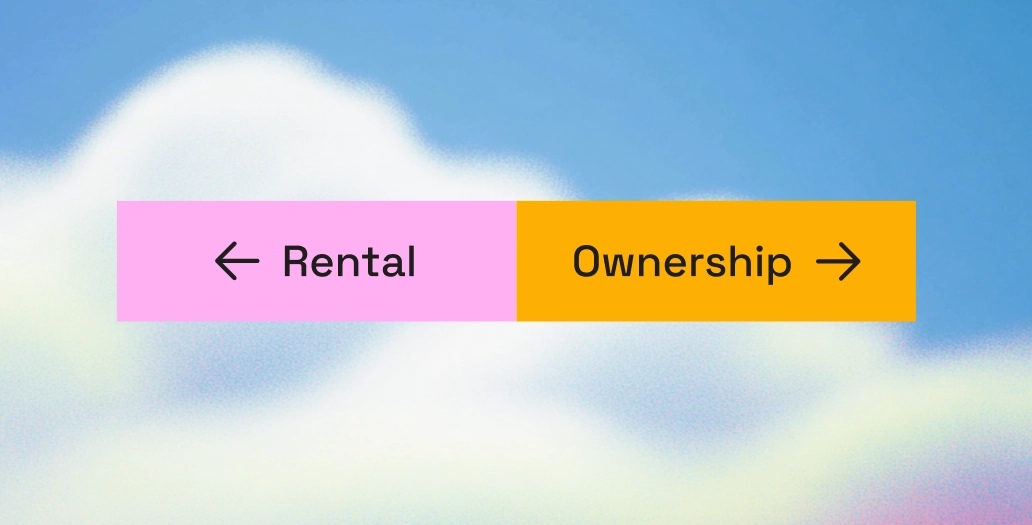

On May 17, Publicis Groupe bought LiveRamp for $2.17 billion. Most of the industry will treat this as another consolidation headline. It is not. It is the public funeral of an architecture the open internet has spent fifteen years pretending was viable.
Identity on the open internet has never been your product. It has been someone else's product, rented to you under the polite fiction that the renter would stay neutral forever. Everyone in the building knew. Everyone in the building pretended. That fiction died Sunday morning. Publicis paid 29.8 percent over the prior close for the right to delete it.
Stop calling it a consolidation. It is a confession.
In 2019, Publicis bought Epsilon. The chorus from the industry, in unison, was "Epsilon will operate independently." Seven years later, here is the empirical test: ask any non-Publicis brand how much of their first-party data sits in Epsilon's clean room today. The answer is roughly none. Brands voted with their data. "Independent subsidiary" is a marketing artifact, the structural equivalent of a wedding ring at an auction.
Run the same script on LiveRamp. Same buyer. Same promise. Same outcome. If you believe this time will be different, you owe an explanation for why the same management team, the same incentive structure, and the same parent company will produce a different result. Nobody has that explanation. They will not get one.
The only reason the open internet tolerated a single closed identity utility for fifteen years was the assumption that the operator in the middle had no commercial incentive to favor one buyer over another. That assumption is gone. It is not coming back. Procurement teams will figure out the renewal math before legal departments do. They usually do.
This is not a Publicis problem. This is the holdco problem.
The temptation right now is to say "well, LiveRamp specifically is the issue." It is not. The structural problem is the holdco-owned identity pattern, and Publicis just made it impossible to ignore. Every major holding company has spent the last decade acquiring or commercially aligning with the data and identity infrastructure their clients depend on. Publicis ran the play loudest. If you have read any holdco earnings deck since 2020, you have seen the same play in three different costumes. Go read one. Then count.
If you run a brand outside Publicis, a publisher selling demand outside Publicis-aligned networks, a retail-media network competing with CitrusAd, or any platform that markets itself as independent of the holdcos, your match rates, audience builds, and conversion signals now sit inside a Publicis-owned ecosystem. Contractual firewalls hold on day one. They do not hold by Christmas.
If you are a brand that works with Publicis, your identity infrastructure is now consolidating around a single vendor with monopoly leverage on the inside of your stack. Consolidation is rarely a good deal for the buyer. It is never a good deal for the buyer's other vendors.
You already know this. You have not said it out loud yet.
Your CRO has said "we will reevaluate at renewal" on three calls this month. Your CDO has said "let us see how the integration plays out." Your procurement lead has said "we should map our vendor concentration risk." All of you know what you are doing. You are waiting to see whether the rest of the market moves first so you do not have to be the one to say it. Somebody is going to be the one. It might as well be you.
Closed-graph identity is over as a category. Not "challenged." Not "evolving." Over. There is no surviving version of "trust a third party to sit in the middle of the open internet and act against its own commercial interest forever." It was always a children's story. The grown-ups just got tired of pretending.
The only architecture that survives the next five years is the one the modern data stack already chose for storage, compute, transformation, and orchestration: customer-owned, warehouse-native, federated, vendor-agnostic. Your identity graph lives in your cloud account. You hold the keys. You compose data inputs and activation partners on your terms. When a vendor's strategic priorities shift away from you, your graph stays put. This is not a feature roadmap. It is a property of where the data physically sits. Marketing claims get walked back. Physics does not negotiate.
Personally, then.
I founded Narrative. We have been building the warehouse-native version of identity from day one, when the rest of the industry was still happily renting from the middleman. I have a commercial stake in this thesis being correct, and I will not pretend otherwise. Pretending is what got us here. What I will say is this: read the contracts. Map the data flow. Ask who can change the rules unilaterally. Ask who profits when they do.
The polite fiction ended on May 17. The only question left is how much runway your next renewal gives you to act on it.
Want to see what warehouse-native identity actually looks like in production? Book a demo and we'll walk you through it.
Explore related
Insights, stories, & resources for the teams building modern data infrastructure.

Blog
•
4
Mins
Narrative Reimagines the Marketplace: A Composable Hub for Data and AI Work

Blog
•
4
Mins
Clean Rooms Were Necessary. They Were Never Enough.